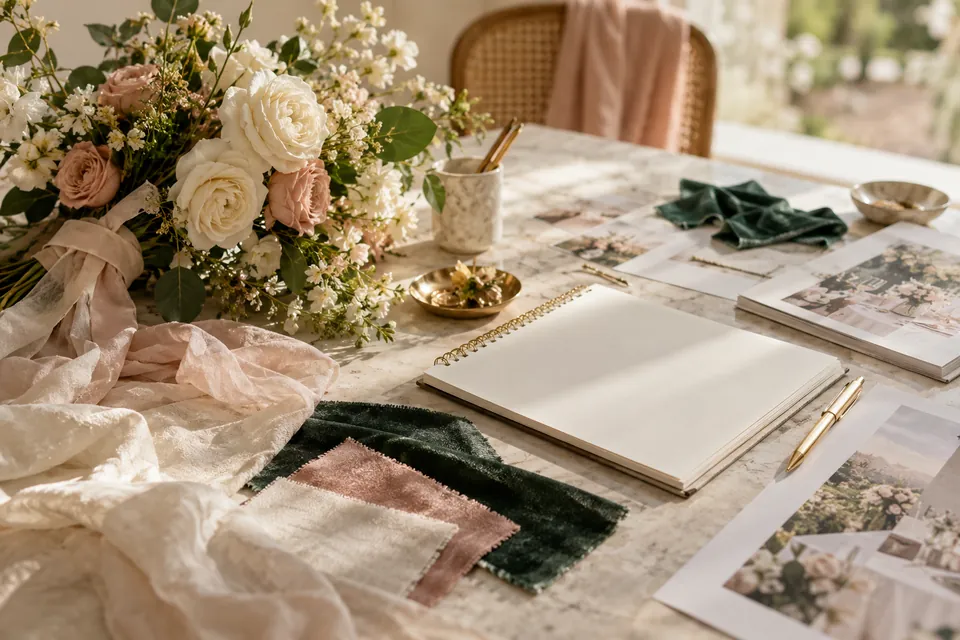
Start with a realistic spending ceiling, an approximate guest count, and three shared priorities. Then book the date and venue, secure the suppliers your celebration depends on, and work backward from the ceremony. A wedding planning checklist is most useful when every task has an owner, a deadline, and a reason to be there.
Before the bookings: agree on the shape of the day Set aside one conversation for the experience you want rather than the things you might buy. Would you rather linger over dinner with thirty guests or dance with a hundred? Is traveling together part of the celebration, or would a local venue make attendance easier? Write down three priorities separately, compare them, and keep the overlapping ideas visible.
Create an initial guest list before requesting venue quotations. Include partners and children according to a consistent approach, and note households rather than just individual names. An approximate head count affects room capacity, catering, rentals, and transport. Keep an invitation list separate from a confirmed attendance list so estimates do not become accidental commitments.
Discuss who contributes financially and whether a contribution carries expectations. Record amounts only when confirmed. A budget should reflect money you can comfortably use, not a hoped-for gift total. Leave room for uncertain costs; the size of that reserve depends on how many details are still unresolved.
A flexible timeline, organized by decisions The windows below are planning suggestions, not booking rules. Popular venues may require earlier enquiries, while a small restaurant reception may come together faster. If you have less time, preserve the order of dependencies and reduce optional projects.
| Planning window | Decisions to complete | What depends on them |
|---|---|---|
| First planning sessions | Budget ceiling, guest estimate, location, priorities | Venue shortlist and style |
| Around 9–12 months out | Venue, date, ceremony arrangements, key vendors | Save-the-dates and accommodation |
| Around 6–9 months out | Attire, food format, photography scope, music | Fittings and reception schedule |
| Around 3–6 months out | Invitations, rentals, floral brief, transport | Guest information and seating |
| Around 4–8 weeks out | Replies, final counts, supplier timing | Catering order and day sheet |
| Final week | Confirmations, packing, handover | A calmer wedding morning |

Build a budget that shows the whole price Use one spreadsheet with columns for estimated cost, quoted cost, deposit paid, balance, due date, and cancellation terms. Compare suppliers on the same scope. A venue package including chairs, staffing, and setup is different from an empty room hire even when the headline prices look similar.
Ask about taxes, service charges, overtime, delivery, collection, security, cleanup, and minimum spends. Confirm what happens if your guest count changes. Do not treat a sample online budget as a universal percentage formula: local prices and your choices may make photography a larger priority than flowers, or food a larger priority than entertainment.
Choose the venue before the visual details Visit with practical questions: Where does the ceremony move in rain? What is included in the hire period? Which suppliers are restricted? Can the catering team work in the available kitchen? Is the route from arrival to dinner usable for guests with different mobility needs? Ask to see the spaces you would actually use, including restrooms and the indoor alternative.
Read the contract before paying. Record occupancy limits, noise restrictions, insurance requirements, payment dates, and who authorizes changes. Put any essential verbal promise into the agreement. Our venue parking guide explains the arrival questions to bring to a visit, especially when a venue has several entrances.
Book vendors with a shared brief Give each potential supplier the date, location, approximate count, priorities, and available budget for their part. A photographer needs to know whether you want getting-ready coverage or only ceremony and dinner. A musician needs performance length, setup access, power arrangements, and whether amplification is allowed.
Check the deliverables, substitution arrangements, cancellation policy, and communication contact. For photography, clarify image delivery and usage rights. For catering, clarify dietary requests, staffing, and the final-count deadline. Keep signed documents together and avoid making the wedding day contact responsible for finding them in scattered messages.
One practical vendor tracker For each booking, note the supplier, lead contact, arrival time, access instructions, final payment, and next decision. Add a backup contact where available. Share only the parts a vendor needs; guest health information and private family notes do not belong in a broadly circulated supplier document.
Shape the ceremony and guest communication Confirm the legal requirements directly with the relevant authority and your officiant. A symbolic ceremony and a legally recognized marriage may require different arrangements. Plan music cues, readings, vows, and the procession with the person leading the ceremony, then rehearse the transitions rather than trying to script every emotion.
Send invitations with a clear reply date, named invitees, and the practical details guests need. Use the invitation wording examples to separate the invitation itself from travel, dietary, and accessibility information. Explain dress expectations in plain language and avoid making guests guess whether a welcome dinner is included.
The final month: move from ideas to instructions Collect outstanding replies individually, finalize seating with dietary requirements in mind, and check supplier deadlines before submitting counts. Build a day sheet that starts with venue access and ends with collection. Leave realistic gaps for travel, portraits, room changes, and meals for the couple.
Give the day sheet to a coordinator or trusted helper who has agreed to the role. Choose a decision contact for each major area instead of sending all questions to one person. Talk through your ceremony ideas with the officiant so the ceremony length and reception schedule support each other.